






What Does RTP Mean in Online Slots? Here’s What It Really Means and How It Affects Gameplay


Anyone who plays online slots has probably come across the acronym RTP, usually followed by a percentage somewhere above 90%. But what does RTP actually mean, and what does that percentage really represent? More importantly, what is the relationship between RTP and winnings? In this guide, we break it all down.
To begin with, RTP stands for Return to Player: a technical concept at the core of how modern slot machines work, and one that is often misunderstood. The RTP of a slot is the “theoretical” percentage of all wagered money that the game returns to players in the form of winnings over the long term.
For example, if a slot has an RTP of 96%, this means that, theoretically, over a very large sample of spins, the game will return an average of €96 for every €100 wagered. The remaining €4 represents the casino’s theoretical edge, also known as the house edge built into the game.
This definition already raises an important question: why is RTP described as “theoretical”? Although slot outcomes are determined by highly sophisticated algorithms, these systems rely on RNG technology — short for Random Number Generator. In other words, the results of each spin are still random and unpredictable. The RTP is predetermined by the game provider, but actual short-term outcomes can vary significantly. That is why it is more accurate to say that a slot tends to return €96 for every €100 wagered over time, rather than guaranteeing that result in every session.
Why RTP Matters
RTP matters because it is one of the few objective indicators that can help players understand whether a game is theoretically more or less favorable in the long run. If we compare two similar slots — one with a 96.8% RTP and another with a 95% RTP — the first one will theoretically retain less money over time. In theory, that makes it more advantageous for players. However, RTP has very little predictive value in a single gaming session.
This is where many players get confused. RTP is calculated over an enormous sample size, often hundreds of thousands or even millions of spins. It is not a shortcut for predicting how much a slot will pay during a short session. A high RTP is not a guarantee of short-term winnings, and the slots that pay out the most in a given moment are not necessarily those with the highest RTP.
Theoretical RTP vs Real RTP
In the short term — for example, over all the spins generated on a slot during a week or even a month — the “theoretical” RTP declared by the developer can differ dramatically from the actual payouts experienced by players. Every slot has an RTP below 100%, and if theoretical RTP always matched real-world results exactly, players would inevitably lose at a perfectly constant rate. In reality, variance plays a major role. Even a slot with an average or relatively low RTP can produce major wins in a single session.
This is one of the reasons why obsessing over high-RTP slots can sometimes be misleading. RTP is useful as a long-term mathematical reference, not as a prediction tool for short-term outcomes.
RTP and Volatility Are Not the Same Thing
Another concept that is often confused with RTP is volatility. Slots are commonly described as low, medium, or high volatility games, but volatility refers to something completely different. It does not describe how much a slot can pay overall, but rather how payouts are distributed over time and how large they tend to be.
A high-volatility slot tends to pay less frequently. Players may experience many losing spins in a row, but when a winning combination appears, the payout is often larger than average. By contrast, a low-volatility slot tends to award wins more frequently, although those wins are usually smaller and can sometimes even be lower than the original bet amount.
If someone wants to understand how a slot may behave in the short term, volatility is generally a far more useful indicator than RTP. In fact, RTP itself can sometimes vary even within the same slot game, depending on how the casino operator configures it.
Fixed RTP and Variable RTP
Many slot providers offer casinos multiple RTP configurations for the same game. Depending on the house edge a casino wants to maintain, operators can choose a higher or lower RTP version of a slot. As a result, the exact same game may have different RTP values across different online casinos.
In addition, the theoretical RTP of a slot can also change internally during gameplay depending on bonus mechanics and additional features. Jackpots, free spins, bonus rounds, and other extra features can influence the game’s overall RTP structure.
In regulated markets, operators are often legally required to display RTP information clearly. Players can usually find this information inside the game’s info panel, often accessible through a button placed somewhere on the screen interface. Alongside RTP, these panels generally include paytables, symbols, and game rules.
Using RTP the Right Way
The most sensible way to use RTP is as a comparison tool rather than a prediction tool. If two slots appeal to you equally, it may make sense to prefer the one with the higher theoretical return. On the other hand, if a slot offers an excellent RTP but has volatility that does not fit your budget or playing style, it may still not be the right choice for you. For instance, players with smaller bankrolls may struggle with the long losing streaks typical of high-volatility slots.
Ultimately, RTP should help players make more informed decisions about which games they choose to play, not convince them that certain outcomes are more likely to happen.
RTP and Responsible Gambling
Understanding RTP can also encourage more responsible gambling habits because it helps remove some of the common misconceptions surrounding slot machines. Knowing that every game is mathematically designed with a house edge — and understanding that short-term outcomes can differ wildly from long-term expectations — can help players avoid beliefs such as “the slot is due to pay” or “it has to give the money back eventually”.
Transparency around RTP exists precisely to remind players that slot machines operate according to mathematical systems, not emotional patterns or compensation cycles. RTP is a serious and useful metric, but only when interpreted correctly.
Learning what RTP really means is an important step toward understanding how online slots work beyond the idea of immediate luck. It helps players distinguish between meaningful statistical information and false promises. In that sense, RTP remains one of the most important concepts in online casino gaming — as long as players do not expect it to provide something it simply cannot offer.





Sportsbook Software Providers and Platform Strategy in 2026

Ivy Casino Login Guide & How to Claim Your Daily Login Bonus

Vegastars Review: New Zealand Casino Brand Analysis
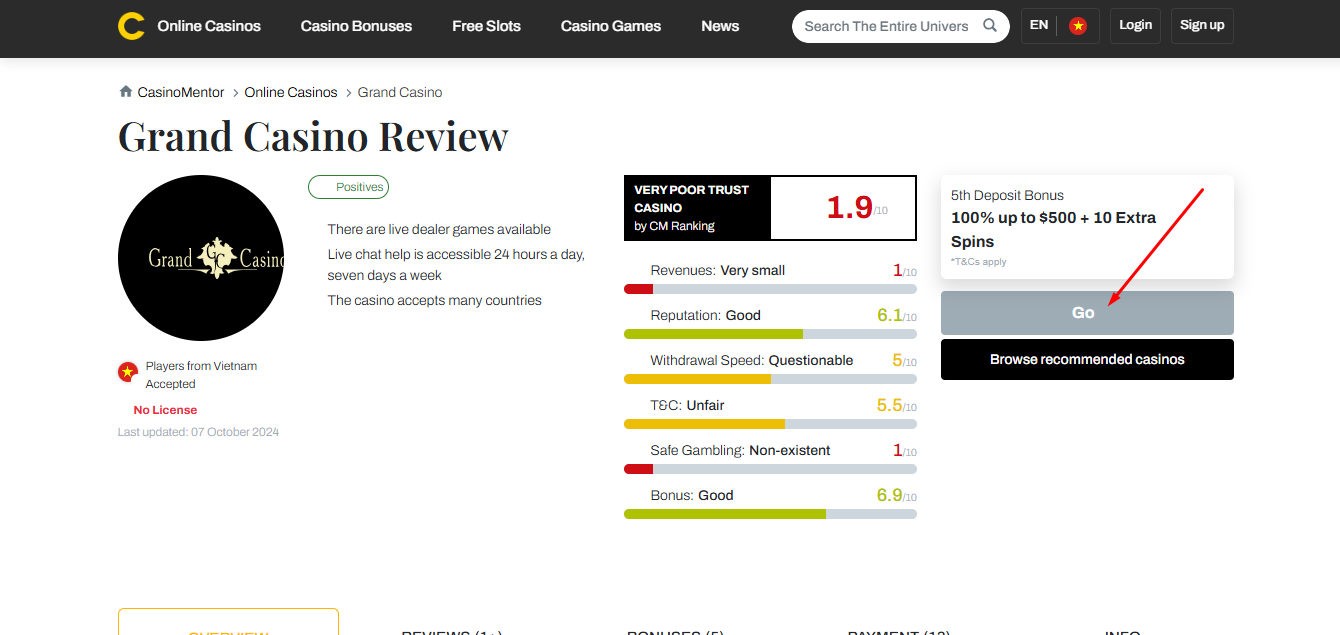
Grand Casino Login Guide & How to Claim Your Daily Login Bonus