






How to Use Casino Review Sites Effectively: A Player's Guide to Evaluating Sources, Spotting Bias, and Making Smarter Decisions

Casino review sites exist on a spectrum. At one end are genuinely independent platforms staffed by researchers who test casinos with real money, verify licensing documents, track complaint resolution over months, and update information when terms change. At the other end are thin affiliate pages dressed as reviews — lists of casinos ranked by commission rate, with positive language applied regardless of the underlying platform's quality.
Most review sites sit somewhere between these extremes. The problem is that they all look similar from the outside: they use the same star ratings, the same category breakdowns, the same reassuring language about "expert teams" and "independent research." Learning to distinguish between them — and to use even good review sites more effectively — is one of the most practical skills an online casino player can develop.
This guide breaks down exactly how to do that.
Understanding the Affiliate Model: Why It Matters and When It Doesn't
The first thing to understand about casino review sites is how most of them generate revenue. The majority operate as affiliates: when a player clicks through to a casino and registers, the review site earns a commission — typically a percentage of the player's net losses over their lifetime. This is the standard business model of the industry, and its existence does not automatically mean a review site is compromised.
What it does mean is that incentive structures exist, and understanding them helps you read reviews more critically.
Signs that affiliate incentives are distorting reviews:
No meaningful differentiation: Every casino on the site receives a positive review, with no genuine quality ranking between them.
Commission-biased rankings: Casinos that pay higher commissions appear disproportionately at the top of "best casino" lists regardless of independent quality metrics.
Buried wagering requirements: Bonus terms are highlighted in the headline but wagering requirements are omitted or minimised.
Absent complaint coverage: Withdrawal issues and player complaints are not mentioned or are dismissed with vague language.
Outdated information: Incorrect licensing details, expired promotions, or bonus values that no longer match the casino's current terms.
Signs of genuine editorial independence:
Negative reviews and blacklists: The site publishes casinos that failed their standards, not just approved ones.
Documented complaint records: Complaint resolution cases are published, including those where the casino failed to respond satisfactorily.
Verified licensing: License information is linked to the issuing authority's public register, not just stated.
Full bonus analysis: Wagering requirements, game contribution rates, time limits, and max bet restrictions are all covered.
Published methodology: The criteria and weighting used to calculate ratings are explicitly described.
What Licensing Evaluations Actually Tell You — and What to Verify Yourself
Licensing is the single most important factor in evaluating an online casino, and it is also the most commonly misrepresented. A review site that simply lists a casino's license without explaining what that license entails is providing less information than it appears to.
Here is what different licensing jurisdictions actually mean in practical terms:
Malta Gaming Authority (MGA): One of the most stringent regulators globally. MGA-licensed casinos maintain player funds in segregated accounts, comply with responsible gambling standards, and submit to independent audits. Complaints can be escalated to the MGA directly. This licence provides genuine, enforceable player protection.
UK Gambling Commission (UKGC): The strictest major regulator. UKGC casinos must comply with affordability check requirements, enhanced AML procedures, and strict advertising standards. Withdrawal protections are legally enforceable. For UK players, a UKGC licence is the non-negotiable baseline.
Curacao eGaming: The most commonly held licence for casinos targeting markets outside the EU and UK. Curacao is a lighter-touch regulator — complaints are handled by the casino itself rather than a statutory authority. A Curacao licence is not a red flag, but player protections are primarily contractual rather than regulatory.
Gibraltar / Isle of Man / Kahnawake: Mid-tier jurisdictions with reasonable oversight. Generally more protective than Curacao, less enforceable than MGA or UKGC.
When using any review site, verify the licence independently: go directly to the licensing authority's public register, search for the casino's name or licence number, and confirm the licence is current. This takes two minutes and eliminates a category of risk entirely.
How to Read Bonus Terms Analysis
Bonuses are where the gap between surface-level reviews and rigorous ones is most visible. A review that highlights a "200% welcome bonus up to $500" without analysing the wagering requirements is providing information that is potentially misleading.
The complete picture for any bonus requires all four of the following:
Wagering requirement (WR): The number of times you must play through the bonus amount before withdrawing. A 30x WR on a $100 bonus means $3,000 in qualifying bets. On games at a 4% house edge, you would expect to lose approximately $120 meeting that requirement — meaning the bonus has negative expected value before you start. Any WR above 40x on a standard slot bonus should be treated with scepticism.
Game contribution rates: Most bonuses restrict which games count toward wagering requirements. Table games often contribute 10% or less, live casino games frequently contribute 0%, and specific slot titles may be excluded. Without this information, you cannot evaluate a bonus's actual playability.
Time limits: A bonus with a 30-day expiry is meaningfully different from one with a 7-day expiry on the same WR. Time-limited bonuses on high WRs are designed to expire unused.
Max bet restrictions: Placing bets above a specified amount (often $5-$10) while a bonus is active can void the entire bonus balance. This condition is frequently missed in surface-level reviews but is critical to know before playing.
Global Platforms vs. Market-Specialist Review Sites
One limitation of large global casino review platforms is that their evaluations are necessarily generalised. A site covering thousands of casinos across many markets cannot provide the same depth of market-specific analysis as a platform focused on a single region.
Market-specialist review platforms offer several advantages for their target audience:
Payment method coverage: They track deposit and withdrawal options specific to that market — local bank transfer systems, regional e-wallets, country-specific crypto rails — rather than defaulting to generic international payment methods.
Bonus currency accuracy: Welcome bonuses are evaluated in local currency against typical deposit sizes and purchasing power in that market, rather than converted from a global default.
Customer support language verification: Whether live chat and email support is genuinely available in the local language — rather than relying on translation tools — matters significantly to players who need to resolve disputes.
Regulatory context: The licensing frameworks relevant to players in specific markets differ from global defaults. Appropriate licensing for European players may involve different considerations for players in Asia or Latin America.
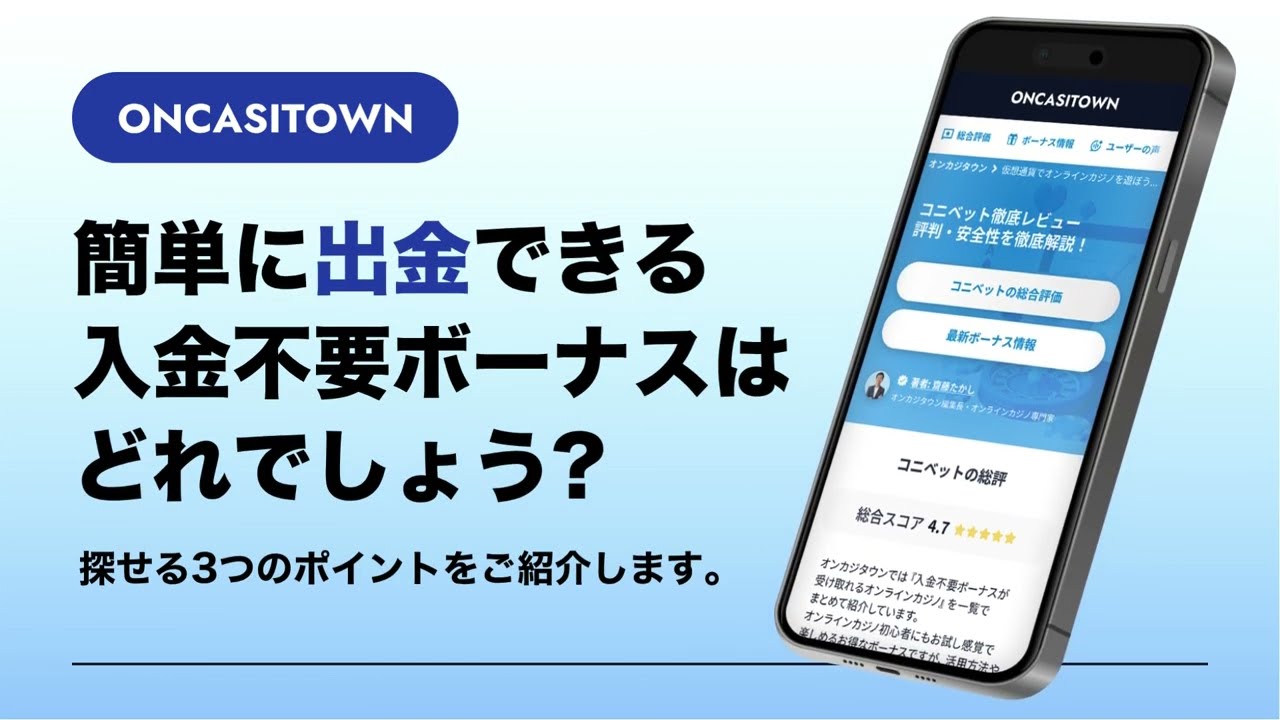
Not all casino review platforms approach their evaluations with the same rigour — some prioritise affiliate revenue over accuracy, omit licensing details, or fail to update bonus terms when they change. For players comparing Japanese-market casinos specifically, finding a resource that covers regional payment methods, yen-denominated bonuses, Japanese-language support availability, and the licensing frameworks relevant to that market requires a more specialised source than a general global review site. Oncasitown casino review site fills that gap: it provides structured, Japan-focused evaluations of licensed casino platforms, covering VIP program mechanics, wagering requirement transparency, and withdrawal speed data — the criteria that matter most to players in that market. Treating it as a complementary reference alongside a global platform allows players to cross-check information and build a more complete picture before committing to any platform.
How to Interpret Complaint Resolution Records
A review site's complaint handling is one of its most revealing quality signals — and one of the least examined by most players. Here is what to look for:
Volume relative to player base: A casino with ten resolved complaints is not necessarily worse than one with zero. A large, active casino will naturally generate more complaints. What matters is the ratio and the resolution rate, not absolute numbers.
Resolution quality: Was the complaint resolved in the player's favour? Was there a genuine explanation from the casino? Did the review site follow up to confirm the resolution held? Complaints marked "resolved" without these details are low-information.
Types of complaints: Withdrawal delays are common and often resolvable. Confiscated winnings due to bonus term disputes, account closures without explanation, and failure to complete KYC verification in reasonable timeframes are more serious structural red flags.
Casino responsiveness: Does the casino engage with complaints on the review platform, or ignore them? A casino that responds professionally — even to negative complaints — demonstrates accountability. One that does not respond is telling you something important about how it handles disputes.
A Practical Checklist Before Depositing at Any Casino
Combining the principles above, here is a structured checklist for evaluating any casino before making a first deposit:
Licensing (non-negotiable):
Verify independently: Search the licence number directly on the regulator's public register — do not rely on the casino's or review site's statement alone.
Confirm current status: Licences can be suspended or revoked. Check that the licence is active, not just that it was issued.
Bonus evaluation:
Exact wagering requirement: The precise multiplier, not a range or approximation.
Game contributions: Which games count toward the WR at 100%? Which are restricted or excluded?
Time limit and max bet: How many days to complete the WR, and what is the maximum allowable bet size while the bonus is active?
Withdrawal assessment:
Processing time: Average time based on recent player reports, not the casino's stated maximum.
Limits: Per-transaction, daily, and monthly withdrawal caps, if any.
KYC requirements: What documents are needed, and how long does the verification process typically take?
Complaint history:
Documented patterns: Are there recurring complaint types across multiple players? Patterns are structural signals.
Casino engagement: Does the casino respond to complaints on review platforms, and how?
Market fit:
Payment methods: Does the casino support your preferred deposit and withdrawal options?
Language and support hours: Is customer support available in your language during your typical playing hours?
Deposit and bonus sizing: Are the minimum deposit requirements and bonus terms appropriate for your typical session size?
Conclusion: Review Sites as Research Tools, Not Final Verdicts
The most effective way to use casino review platforms is to treat them as structured research tools rather than authoritative final verdicts. No single review site — regardless of its methodology or reputation — can fully substitute for your own verification of the specific factors that matter most to you.
What good review sites do is compress the research process: they have already verified licensing, tracked complaints over time, analysed bonus terms in detail, and evaluated payment infrastructure. Using that work as a starting point — and then independently verifying the two or three factors most critical for your specific situation — is the optimal approach.
The players who consistently have the best experiences with online casinos are not the ones who spend the most time finding the highest bonus. They are the ones who spend a moderate amount of time verifying the fundamentals before they deposit, and then choose platforms that have demonstrated they handle the things that go wrong as well as the things that go right.
RELATED ARTICLES

Where online casinos are legal in the US: 2025 state-by-state breakdown
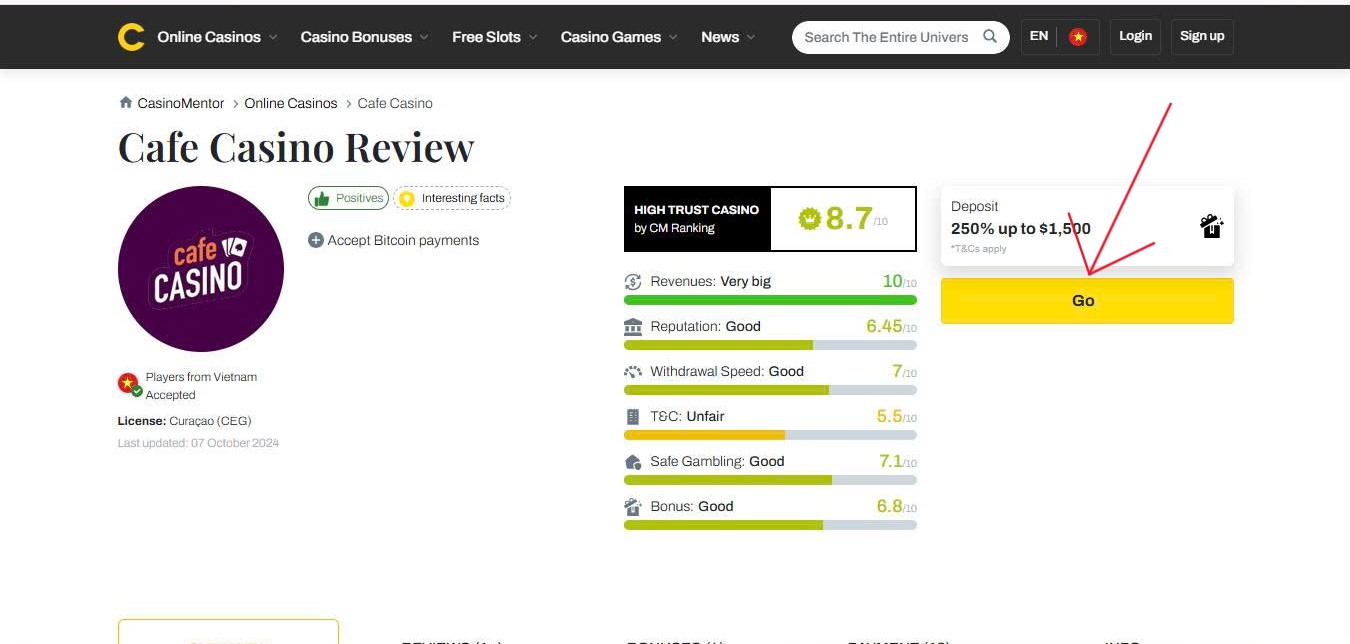
Cafe Casino Login Guide & How to Claim Your Daily Login Bonus

Maximizing the Experience: An Industry Expert’s Guide to Getting the Most Out of Sweepstakes Gaming.

Variety In Casino Gaming Is Integral To The Health Of The Industry - Here's Why
Yukon Casino Login Guide & How to Claim Your Daily Login Bonus

Uwin Casino Login Guide & How to Claim Your Daily Login Bonus

What Determines the Real Value of Online Casino Bonus Offers

Evaluating trustworthiness in online pokies platforms