






The Queen Who Conquered Hollywood, Museums and Now Mobile Screens

Very few historical figures have managed to remain genuinely interesting to new generations without the help of new discoveries. Most of antiquity fades into the background noise of textbooks – names you recognize but don't particularly feel anything about.
Cleopatra is the exception that makes this rule look fragile. She has been continuously reinvented for two thousand years, and each reinvention somehow adds to the accumulated total rather than replacing what came before. The Roman poets wrote about her with unmistakable intensity. Shakespeare gave her some of the most charged language in his plays. Hollywood spent decades and a considerable amount of money trying to get her right. She remains, by any reasonable measure, the most culturally persistent figure the ancient world produced.
The question worth asking isn't why she became famous – the historical record gives plenty of reasons – but why she keeps becoming famous again in new contexts and for new audiences. Part of the answer is that she exists at the intersection of several different mythologies simultaneously: the brilliant ruler, the political survivor, the romantic icon, the embodiment of a civilization that still feels exotic and magnificent despite everything we now know about it. When a cleopatra slot game uses her image as its central motif, it's drawing on this accumulated symbolic weight consciously and efficiently – the golden palette, the hieroglyphic geometry, the asp and the headdress, all of it instantly legible to players who may know very little about Ptolemaic Egypt but recognize the iconography immediately. She travels across media because her image was always already a kind of design system, one that later centuries have been free to redeploy at will.
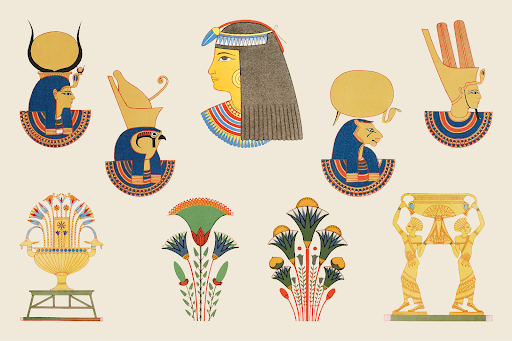
Why certain historical figures achieve cultural permanence
Most rulers leave behind records. A few leave behind legends. The difference between the two has less to do with the scale of actual achievements than with the stories that attached during their lifetimes and immediately after. Cleopatra had the advantage of being genuinely remarkable – her political intelligence, her fluency in multiple languages, her alliances with the two most powerful men in Rome – but she also had the advantage of dying at precisely the moment when Roman writers needed her to mean something specific. She became the symbol of Eastern decadence and female power simultaneously, which made her useful for storytelling purposes in ways that a more straightforwardly heroic figure might not have been.
That dual quality – simultaneously admirable and dangerous, powerful and doomed – is the specific combination that tends to produce lasting cultural figures. We keep returning to her because she's genuinely complicated in ways that simply don't resolve neatly into a single reading, and that kind of unresolvable complexity is precisely what keeps narratives alive and useful across generations.
How her image migrated across centuries and media
| Era | Medium | How Cleopatra was used | Dominant quality emphasized |
| Ancient Rome | Poetry, political rhetoric | Symbol of Eastern threat and seduction | Danger, otherness |
| Renaissance Europe | Theatre, painting | Tragic romantic heroine | Nobility in defeat |
| 19th century | Opera, academic painting | Orientalist fantasy figure | Exotic beauty, spectacle |
| Early Hollywood | Silent and sound film | Glamour icon, costume spectacle | Visual magnificence |
| Late 20th century | Blockbuster cinema, TV | Complex political operator | Intelligence, agency |
| Contemporary digital | Games, apps, streaming | Instantly legible luxury symbol | Iconic visual language |
Each row shows something consistent: every era found in her the qualities it was already looking for. The Romans needed a villain. The Romantics needed a tragic heroine. Hollywood needed spectacle. Contemporary digital culture needs an immediately recognizable visual shorthand for ancient luxury and feminine power. She supplies all of these with equal facility, which is part of what makes her persistence feel less like accident and more like a design property of the image itself.
What the digital reinvention added
The move of Cleopatra's image into games and interactive digital formats didn't diminish the mythology – it extended it into a medium that reaches audiences no museum exhibition, theatrical production, or film release ever quite managed to reach. The visual vocabulary that game designers use when they work with Egyptian imagery is drawn from a genuinely rich source: centuries of artistic interpretation that have, if anything, made the iconography more vivid and more immediately communicative than the original historical record would have produced on its own.
What digital formats added specifically is interactivity – the player isn't watching Cleopatra's story, they're inside an environment defined by her imagery, making decisions within a space that her visual language has shaped. This is a different relationship to the mythology than passive consumption offers, and it's producing audiences for ancient Egyptian aesthetics who came through gaming rather than through history education. Whether that's a dilution or an expansion of the cultural conversation probably depends on what you think the cultural conversation is for. What's not debatable is that she has successfully navigated every media transition for two millennia running, and the current one is no exception. The queen keeps finding new territory.
RELATED ARTICLES

Tips for Bypassing Geo-Restrictions and Gaining Access to Your Favorite Online Casinos

Top 10 Most Popular Online Pokies in New Zealand
Casino Games Are Increasingly Adapting to the Needs and Preferences of Players

Entain Appoints Gavin Isaacs as New CEO Starting September 2024

Comprehensive Guide to A Big Candy Casino Free Spins Promo Codes & Safety Warnings

Ultimate Guide to the Latest Big Spin Casino Free Spin Codes and Promo Codes

1Win Casino Login Guide & How to Claim Your Daily Login Bonus

Ocean Casino Login Guide & How to Claim Your Daily Login Bonus