



Licensed Somewhere, Unlicensed Here: What An Honest Casino Review Has To Tell You

Casino reviews are worth reading more carefully than most people do. A lot of them are written for one market only, and a casino that a comparison site calls licensed may not be legal in your country at all. A gambling license comes from one regulator, and it only covers the markets that regulator controls. A Malta or Curaçao license can be fully valid and still not allow the operator to accept players from where you live. The same casino can be licensed in one place and unlicensed in another.
And that difference matters. It decides whether you have a real complaint route and local self-exclusion, or whether you’re mostly on your own when a withdrawal gets stuck. In my experience, a review that skips this has missed the most important part of the job.
A License Only Works Inside The Market It Was Issued For
Every gambling license is tied to a regulator and a market. Outside that market, the license carries far less weight, and sometimes none at all. For the player, the difference shows up when something goes wrong.
A locally licensed casino answers to a regulator that can fine it or pull its license. It has to offer local gambling tools to prevent gambling addiction. It must also be connected directly to the regulator, guaranteeing fair gaming and that the games available are licensed according to the gambling laws.
A foreign-licensed casino only answers to its own regulator, which may not handle individual complaints at all. Furthermore, the quality of the regulator matters. Some regulators test games, check that player funds are kept separate from company money, and step in when a player has a dispute. Others hand out licenses with little follow-up, so a complaint can easily go nowhere.

Always verify local licensing beyond online casino comparison lists.
Why "Unlicensed" Is Often The Wrong Label
There is a real difference between a casino that holds an active license from Curaçao but no local permit, and a site that holds no license from any regulator at all. The first one answers to a regulator that can audit and sanction it. The second has none of that.
Finnish players run into exactly this confusion. When people in Finland search for kasinot ilman lisenssiä, they mostly mean offshore casinos operating outside Finland's domestic system, even though many of those operators hold a license elsewhere.
A credible review has to name the actual regulator behind each site and explain what protection that regulator really offers, rather than treating every foreign-licensed casino as if it had no oversight at all. A review should never blur them, as readers make very different decisions depending on which one is true.
What An Honest Review Should Spell Out About The License
When I read a review, the licensing section is the first thing I check, before the bonus or the game count. This is what I expect to find there:
- The regulator's name written out in full, not just "licensed and regulated"
- The license number and the company that holds it, matching the company named in the casino's terms
- Whether that license covers the reader's country, or whether the site simply accepts players from there
- What the complaint route looks like if the operator does not fix a problem itself
- The date the reviewer last checked all of the above
That last point gets ignored a lot. Licenses get suspended, operators change their licensing setup, and domains move between companies. A review checked two years ago may describe a casino that no longer works the same way.
Good reviews additionally show their working. That means how the score is calculated, whether the reviewer deposited real money, and whether the site earns commission from the casino it rates.
Where Casino Reviews Usually Go Wrong On Licensing
Most weak reviews fail on licensing for one of two reasons, and both are easy to spot once you know what to look for.
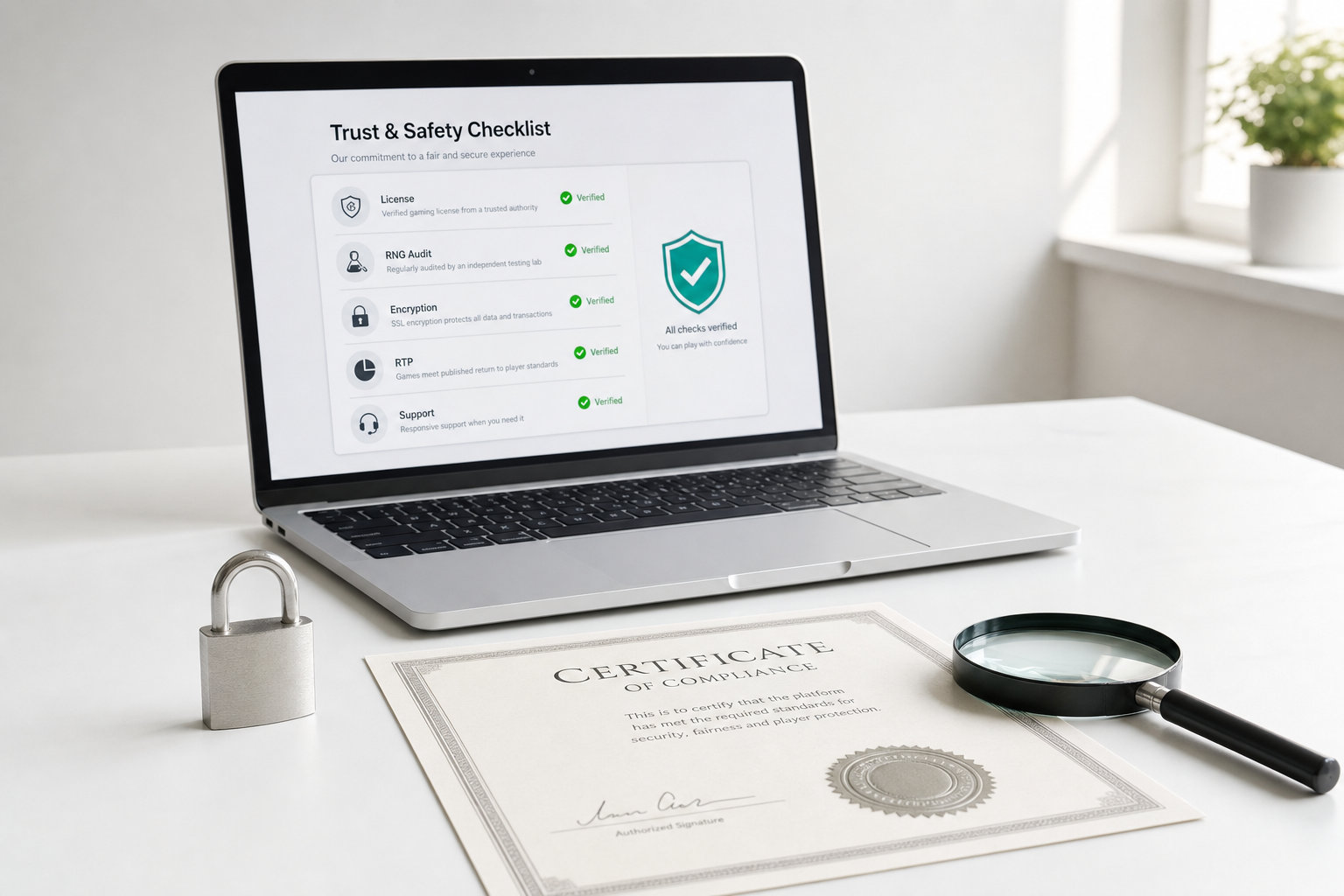
A regulator’s logo in a casino footer proves nothing on its own because anyone can copy a regulator's logo. Serious regulators keep a public register you can search by company name or website. A reviewer who never checked that register has only repeated the casino’s own claim.
Commission Pressure Shapes The Wording
Review sites usually earn a commission when readers sign up through their links. That is fine if the site says so openly. The problem starts when a high-paying brand is called “licensed” with no mention that the license does not cover the reader’s market. In summary, a review with nothing negative to say is closer to an ad.
Finland Shows Why The Distinction Matters Right Now
Finland is a good live example. Veikkaus holds a monopoly on gambling services until the end of June 2027, and during that period no other company may run or market gambling games in the country. The National Police Board started accepting license applications on March 1, 2026, and by late September it had received 75 of them. Licensed private operators can only go live from July 1, 2027.
Until then, any private online casino open to Finnish players operates outside the Finnish system, even if it is licensed elsewhere. Once the market opens, some of those brands will hold a Finnish license and others will not. A review that still describes them all the same way will be wrong overnight. The official timeline is in the Finnish Government’s announcement on opening gambling services to competition.
What You Should Expect From Any Casino Review
A casino review earns trust by being exact about licensing. It should name the regulator, confirm the license on that regulator's own register, and say plainly whether the license covers your country. It should also explain what happens if a complaint goes nowhere, and it should keep "no local license" separate from "no license at all", because those are two different levels of risk.
If a review cannot tell you that, treat its star rating with caution, however polished the page looks.
RELATED ARTICLES

Optimizing Casino Loyalty Programs: Strategies for Earning and Redeeming Rewards
Evaluating trustworthiness in online pokies platforms
.jpg)
Best Places to Play Mines Online
Yukon Gold Casino Login: Member ID Recovery & Secure Access

A Player Is Ruled Out. The Price Moves. What Actually Changed?

From The Price Is Right to Crypto Casinos: How Plinko Became the Most Searched Casino Game in the Americas

Deposit $1 Get 100 Free Spins in the US: What to Know

Deposit 1 Dollar Get Free Spins: How the Offers Work
