





Casino Ratings Decoded: Which Signals Matter More Than A Bonus
.png)
Casino ratings look simple at first glance: a score, a badge, a short verdict, maybe a shiny “top pick” label. The problem is that many ratings are built to sell excitement, not reduce risk. A bonus often steals the spotlight because it is loud and easy to compare. Yet the criteria that decide whether an experience feels safe, predictable, and fair usually live in quieter details.
The same thing happens when judging a game like lucky fish by its cover art alone. Bright visuals can be fun, but the real question is how the game behaves once a session starts: does it run smoothly, does it pay out correctly, does it follow clear rules. Casino reviews work the same way. The most important signals are not the flashiest ones.

Why Bonuses Should Never Be The Main Metric
A bonus is marketing. That does not make it “bad,” but it makes it conditional. A bonus comes with rules, time limits, wagering requirements, game restrictions, and withdrawal caps. A high headline number can hide a low practical value if conditions are strict or unclear.
A stronger approach is to treat the bonus as the last thing to look at. First check whether the platform is trustworthy, stable, and transparent. Only then does it make sense to compare promotions. Otherwise, the bonus becomes a distraction that pulls attention away from the real risk factors.
The Core Question Behind Any Rating: Can The Platform Be Trusted
A useful casino rating answers a simple question: what happens when something goes wrong. A smooth day is easy. The quality shows up when there is a dispute, a delayed withdrawal, a verification issue, or a technical problem.
Trust is not a feeling. It is a set of signals. Licensing and regulation are part of it, but so is how clearly the casino explains rules, how it handles payments, and how support behaves.
The Criteria That Matter More Than “Big Welcome Offer”
A high score should be supported by practical evidence. Not vibes. Not vague claims like “fast payouts” without context. A serious rating looks at the mechanics of the product, not just its surface.
The “boring but powerful” criteria that should outweigh a bonus:
- Licensing and transparency: clear ownership, visible license info, readable terms
- Withdrawal reliability: realistic timeframes, clear limits, predictable verification steps
- Payment method quality: reputable providers, consistent processing, clear fees
- Support responsiveness: real response times, multiple channels, useful answers
- Terms clarity: rules written in plain English, no hidden exceptions
- Responsible play tools: deposit limits, time-outs, self-exclusion that is easy to find
- Game integrity signals: reputable software providers, clear RTP info where applicable
If a review focuses mostly on the bonus and barely mentions withdrawals, that review is basically a brochure.
How To Read The Score Without Falling For The Number
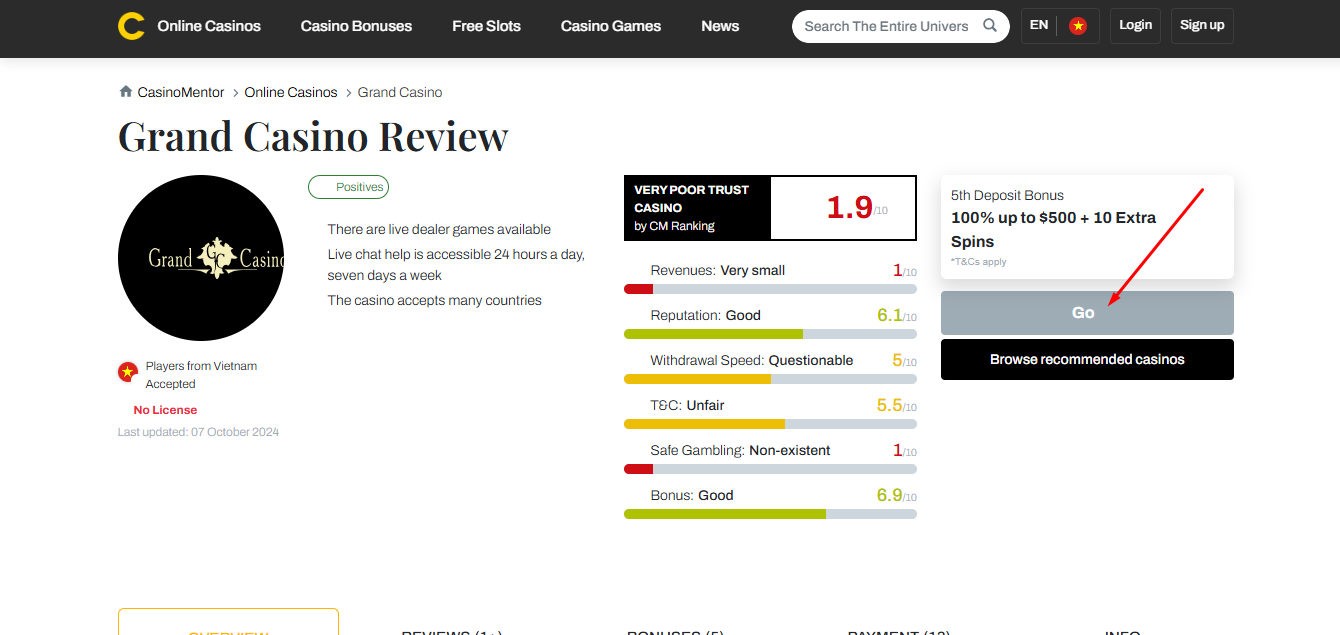
A single rating number is not the truth. It is a summary, and summaries can be biased. The smarter move is reading what the score is built from. Some sites weigh bonuses heavily because it creates clicks. Others weigh player protection and payment reliability more, which is usually more valuable for real users.
A good sign is when a review explains its methodology and uses consistent categories across casinos. Another good sign is when negatives are listed clearly. If every casino is “excellent,” the rating scale is meaningless.
Even flattering reviews can contain warning signs if read like a contract instead of like a story. Certain phrases should trigger skepticism: “may take longer,” “in some cases,” “typically fast,” “varies by method.” Those phrases are not always dishonest, but they often hide the real limits.
Watch for mismatches too. If a casino claims “instant withdrawals” yet requires long verification and uses slow payment rails, the reality will not match the headline. If a platform pushes aggressive pop-ups and unclear bonus prompts, it may also be sloppy in other areas.
A Quick Way To Compare Two Casinos Fairly
When two casinos look similar, compare them on the criteria that change outcomes. The best comparison is not which has a bigger offer. It is which behaves more predictably when money moves.
Start with withdrawals: time, limits, and verification. Then check terms readability. Then check whether support is reachable in a normal way. Only after that should promotions be compared, because by then the comparison is happening inside a safer frame.
A practical comparison order that works under time pressure:
- Withdrawal rules and proof requirements
- Payment methods and any fees
- Terms and bonus restrictions clarity
- Support channels and realistic response times
- Responsible play tools and visibility
- Game catalog quality and software reputation
- Bonus value after rules, not before
This order is not exciting, but it prevents expensive surprises.
The Best Casino Rating Reads Like A Risk Checklist
A good casino rating is not entertainment. It is a risk filter. Bonuses can be a nice extra, but they are rarely the most important feature in a long-term experience.
The criteria that matter most are the ones that protect predictability: licensing clarity, withdrawal reliability, transparent terms, and support that behaves like a real service. If those are strong, the bonus becomes a bonus. If those are weak, the bonus becomes bait.
RELATED ARTICLES

Casinonews.io enters beta: A new contender preparing for a 2026 global news launch
Trends in Social Casino Gaming and Community Engagement

Bongobongo Casino Login Zambia: Secure Mobile Access

Sportzino Casino Login: A Step-by-Step Guide to Secure Access & Daily Rewards

Ocean Casino Login Guide & How to Claim Your Daily Login Bonus

Sportsbook Software Providers and Platform Strategy in 2026
Ivy Casino Login Guide & How to Claim Your Daily Login Bonus

Vegastars Review: New Zealand Casino Brand Analysis